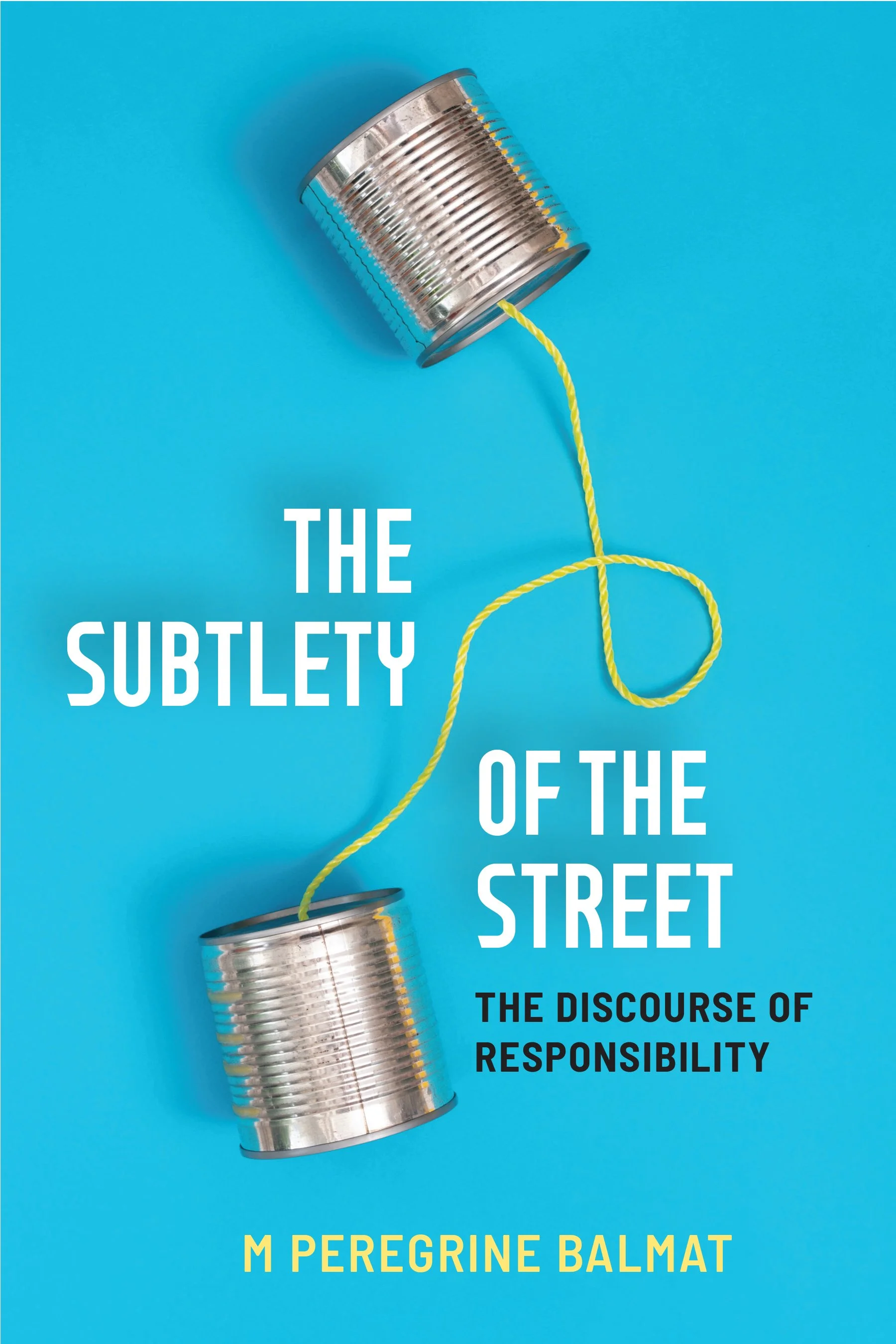
M Peregrine Balmat’s book The Subtlety of the Street shows how street-level workers (e.g. teachers and social workers) construct responsibility through problematic discretionary linguistic choices in their work with marginalized people. Analyzing constellations of words that together he calls “the Gestalt of Responsibility,” he illustrates how constructions of responsibility change over time due to worker demands and policy constraints, and he demonstrates how these constellations function in concert as racialized microaggressions. The book argues for cross-street-level worker professional development that explores how their discretionary linguistic choices on the job impact those they serve.
Blurbs from folks who loved it:
“Grounded in discourse analysis, Balmat shows how dialogue with recipients of service at the street level indisputably shapes the public service experience. Readers will appreciate this closely-observed study with its mix of disciplinary detail and compassionate, thoughtful social commentary.”
-Michael Lipsky, author of Street-Level Bureaucracy.
“Balmat’s theorizing about SLB’s discretionary talk has changed how I view institutional discourse, as well as how I think about my language in classrooms, where I engage future teachers and criminal justice professionals in thinking about theirs. If you’re an educator for the helping professions, you need this book.”
-Chris Jacknick, author of Multimodal Participation and Engagement: Social Interaction in the Classroom
“The Subtlety of the Street is profoundly sensitive to the viewpoints of the underrepresented including those from published works as well as the clients and students being studied. This is undoubtedly a serious work of scholarship and might well reach a larger audience much like Gender Trouble by Judith Butler did.”
-Sanford Schram, Hunter College, CUNY
“The Subtlety of the Street is written in an engaging, vivid, and nuanced language that makes it captivating to read. The auto-ethnographic elements of the text draw you in as a reader and deliver an intimate reading experience. Balmat allows us to gain access to vulnerability and lived experience that deepens our understanding of both marginalization and the role of responsibility.”
-Dorte Caswell, Aalborg University